Kategorija: Uncategorized

  • The Evolution of Wristwatches: From War to Luxury

    The Evolution of Wristwatches: From War to Luxury

    Wristwatches are everywhere today – on wrists, in films, and as symbols of style and status. But their journey from a practical wartime tool to a luxury accessory is a fascinating tale of ingenuity, adaptability, and timeless design. Let’s take a closer look at how wristwatches evolved over the years.

    The Birth of the Wristwatch: A Women’s Accessory

    In the early 19th century, wristwatches were seen as delicate, decorative items exclusively for women. Men preferred pocket watches, considering wristwatches too dainty. However, this perception was about to change dramatically.
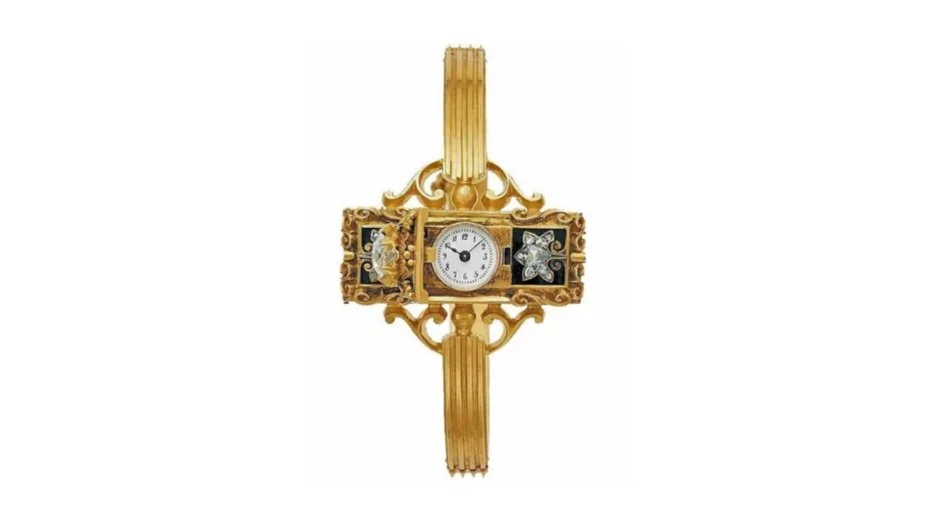
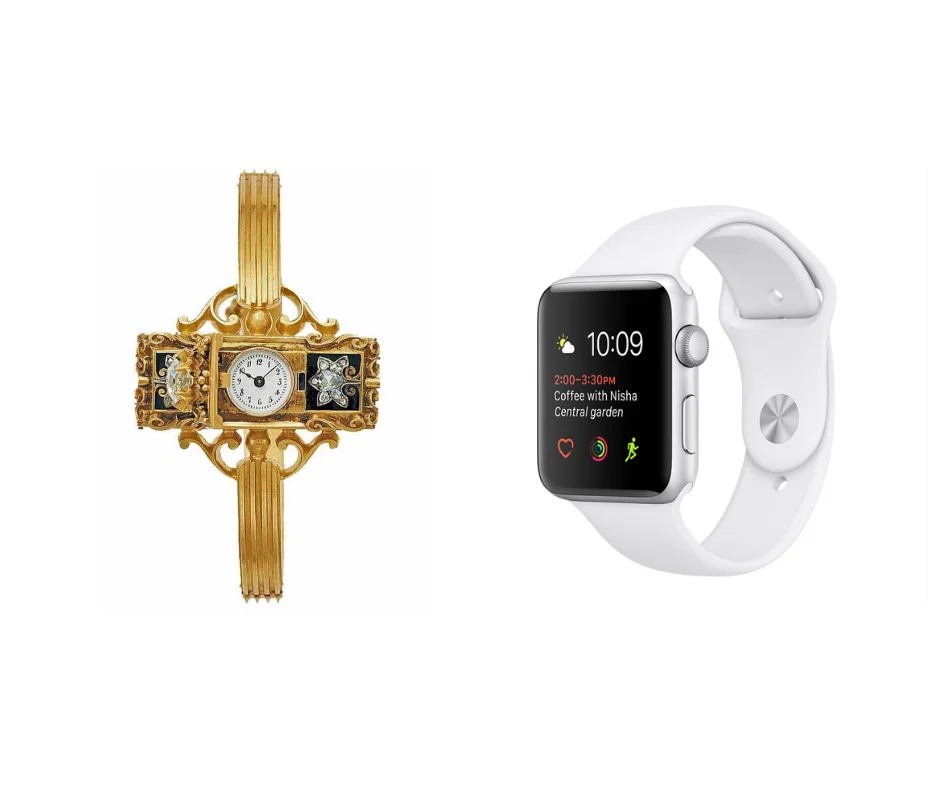
      The first-ever wristwatch, crafted in 1868 by the Swiss watchmaker Patek Philippe, was made for Countess Koscowicz of Hungary.
    The first-ever wristwatch, crafted in 1868 by the Swiss watchmaker Patek Philippe, was made for Countess Koscowicz of Hungary.

    Wristwatches in Wartime: A Practical Necessity

    The shift began during the late 19th and early 20th centuries, when soldiers realized that fumbling with pocket watches in the chaos of battle was impractical. During the Boer War and World War I, wristwatches became essential.

    Officers started strapping pocket watches to their wrists using leather bands, which eventually inspired the first purpose-built wristwatches for men. These watches featured luminous dials, protective grids, and rugged designs tailored for the battlefield. Brands like Omega and Longines played key roles in supplying military timepieces.
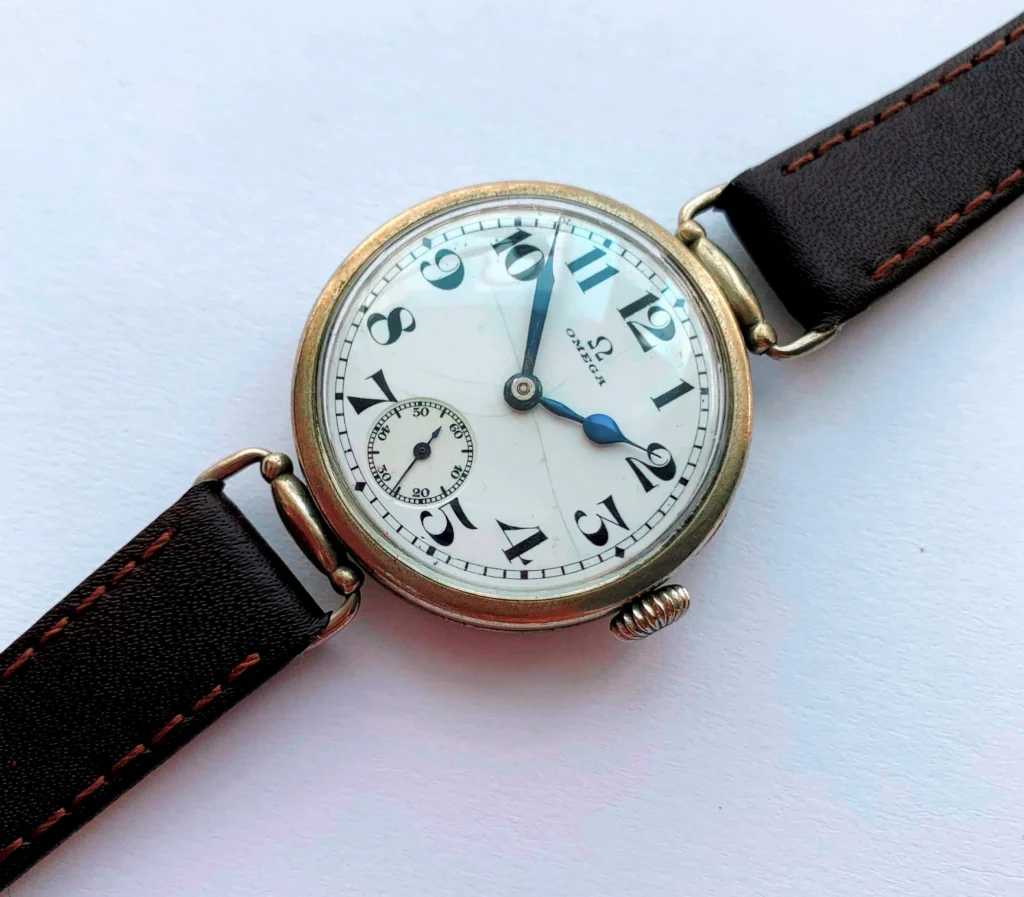
      Omega Trench Watch, designed for officers.
    Omega Trench Watch, designed for officers.

    Post-War Boom: The Wristwatch Goes Mainstream

    After World War I, the practicality and style of wristwatches caught on in civilian life. Men began to embrace them as a fashionable accessory. Watchmakers, sensing an opportunity, started designing pieces that were elegant yet functional. By the 1930s, the wristwatch had largely replaced the pocket watch.
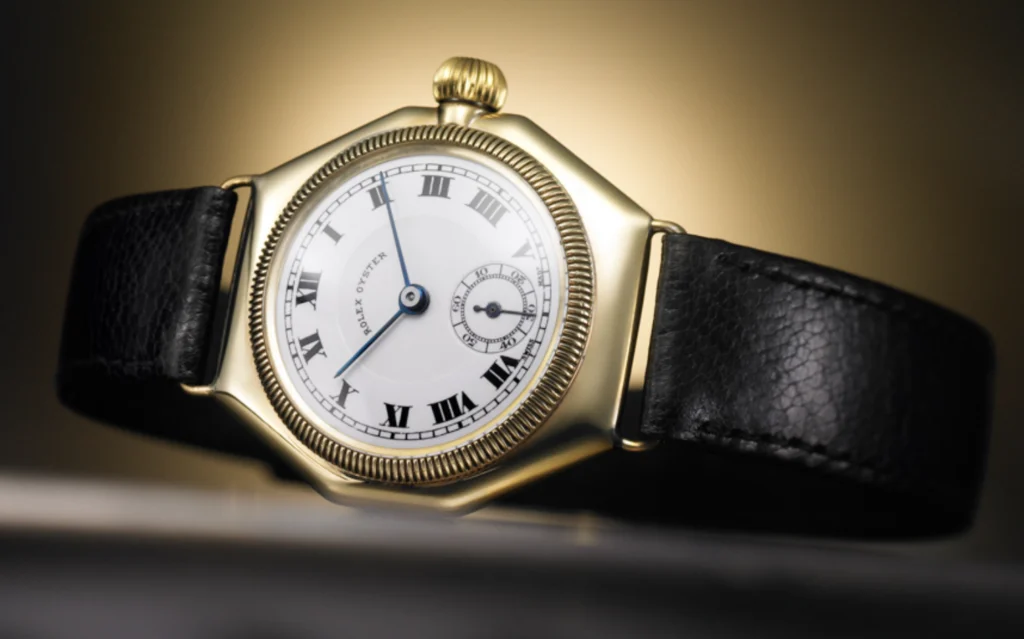
      The Rolex Oyster (1926), the world’s first waterproof wristwatch.
    The Rolex Oyster (1926), the world’s first waterproof wristwatch.

    Wristwatches in World War II: Precision and Innovation

    During World War II, wristwatches became even more advanced. Military watches were designed for durability, legibility, and precision. Features like chronographs (stopwatches), water resistance, and antimagnetic properties emerged. These innovations laid the groundwork for modern sports watches.

    Iconic designs like the A-11, known as the “watch that won the war,” became the blueprint for field watches still admired today.
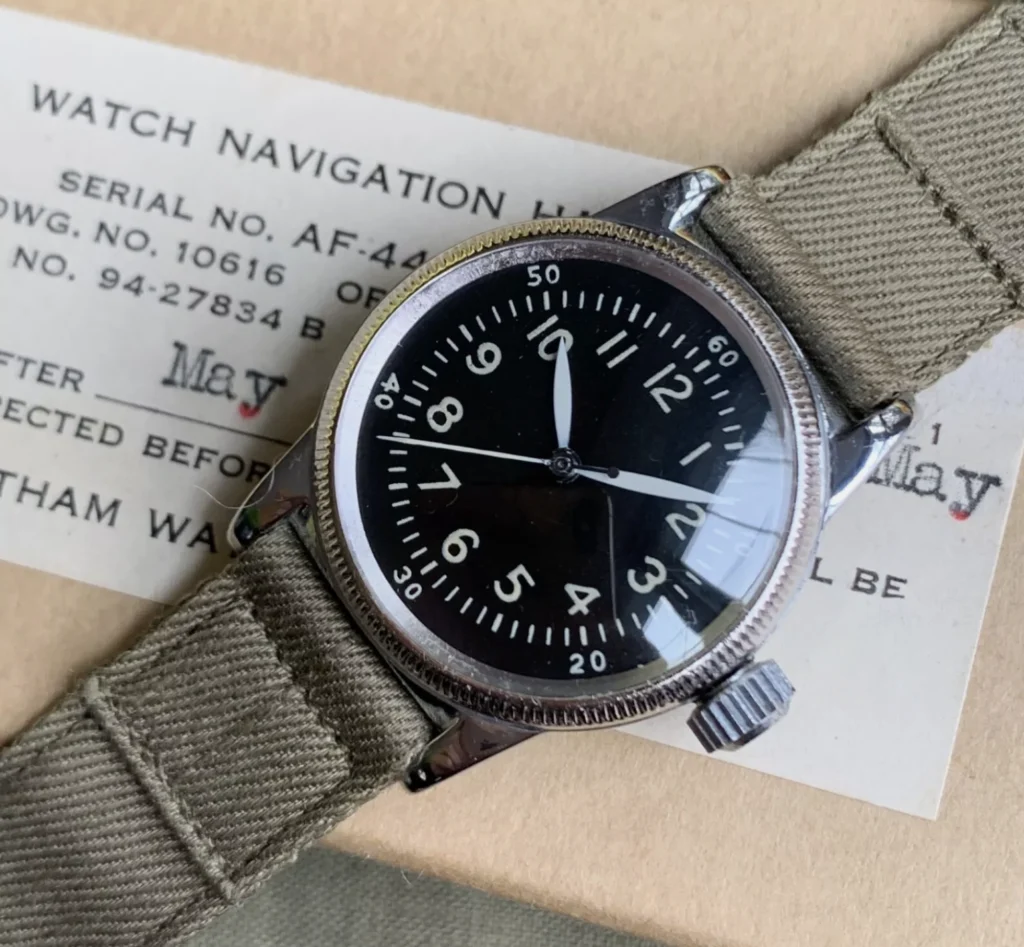
      A-11 watch
    A-11 watch

    The Golden Age of Wristwatches: Post-War Elegance

    The 1950s and 1960s marked a golden age for wristwatches. As economies recovered after World War II, watches transformed from tools of war to symbols of prosperity and elegance. This era saw the birth of iconic models like the Rolex Submariner and Omega Speedmaster.

    Watches were no longer just about telling time – they became status symbols. Brands began experimenting with design, materials, and complications, catering to a growing market of collectors and enthusiasts.
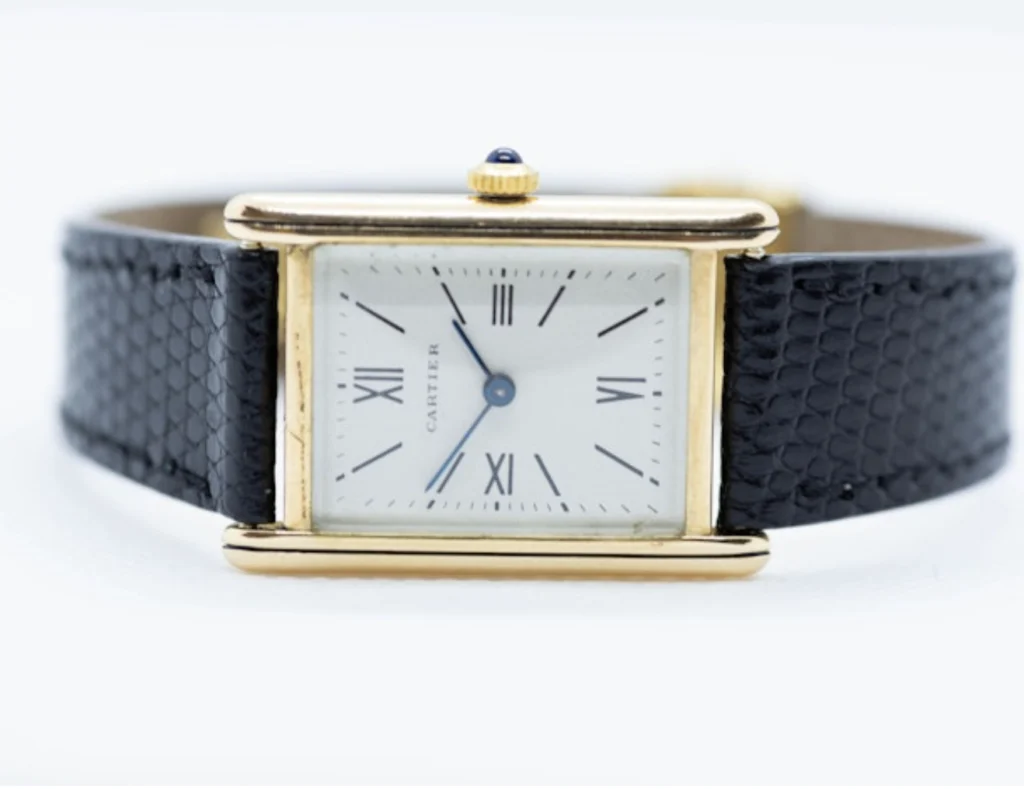
      Cartier Tank, 1950.
    Cartier Tank, 1950.

    The Quartz Revolution: A Technological Shake-Up

    In the 1970s, the quartz movement revolutionized the watch industry. These battery-powered watches were more accurate and affordable than their mechanical counterparts. The rise of quartz watches, led by brands like Seiko, disrupted the dominance of traditional Swiss watchmakers.

    While many Swiss brands struggled, others doubled down on luxury and craftsmanship, emphasizing the artistry of mechanical movements to distinguish themselves.
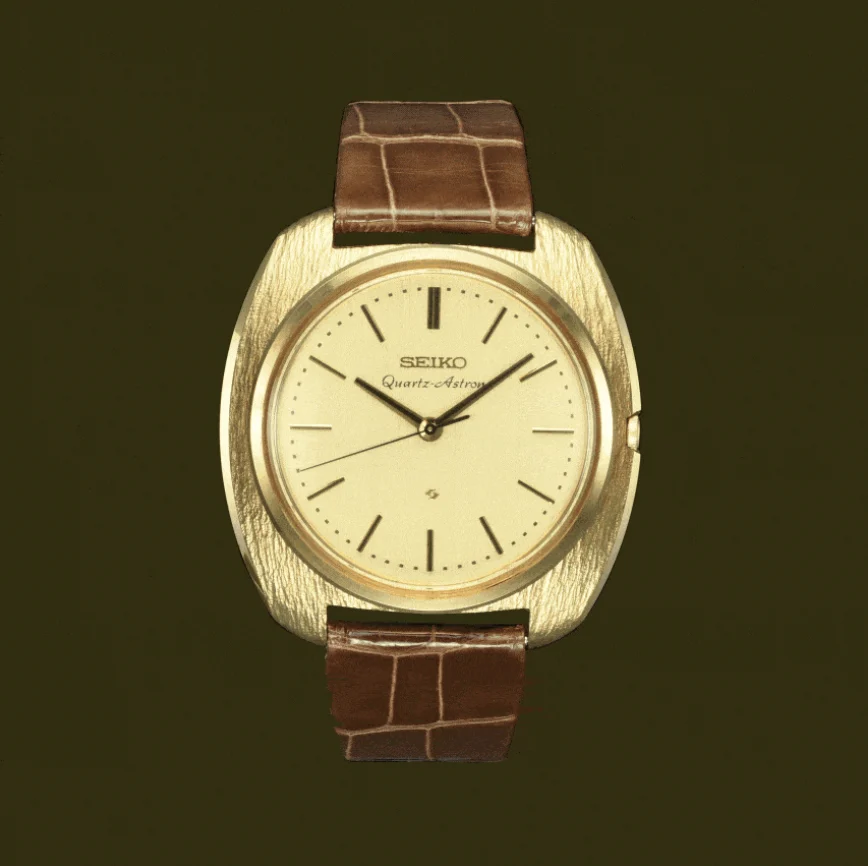
      The Seiko Astron (1969), the world’s first quartz wristwatch.
    The Seiko Astron (1969), the world’s first quartz wristwatch.

    The Modern Era: Luxury Meets Innovation

    Today, wristwatches are a blend of tradition and technology. Smartwatches have entered the scene, offering features like fitness tracking and notifications. Despite this, mechanical watches continue to thrive, cherished for their craftsmanship, history, and timeless appeal.

    Luxury watch brands now focus on creating timepieces that are not just functional but also emotional investments – pieces that tell a story, celebrate heritage, and often last generations.

      Apple Watch Series 1 (2015.)
    Apple Watch Series 1 (2015.)

    From the Trenches to the Red Carpet

    What started as a wartime necessity has evolved into a universal symbol of style, sophistication, and personal expression. Whether you’re wearing a rugged field watch, a sleek dress piece, or a cutting-edge smartwatch, the wristwatch remains a testament to human ingenuity and our enduring fascination with time.


  • In the Shadows of Myth: The Story of Veles

    In the Shadows of Myth: The Story of Veles

    Veles, a central figure in Slavic mythology, embodies the intricate interplay of opposites. Revered as the god of the underworld, wealth, cattle, and magic, he is a force of both creation and disruption. Veles is not easily defined; he is a protector and a challenger, a bringer of fortune and a master of the unpredictable. This enigmatic nature makes him one of the most captivating deities in the Slavic pantheon.

      depiction of Veles
    depiction of Veles

    The Many Faces of Veles

    Veles’s character embodies duality and transformation. Often depicted as a shape-shifter, he takes on forms such as a serpent, wolf, or bear, emphasizing his connection to nature’s untamed forces. As the god of livestock and agriculture, Veles played a vital role in ensuring the prosperity of agrarian communities.

    Beyond prosperity, Veles also ruled the underworld, guiding souls to the afterlife and presiding over the mystical realm of death. This dual role – protector of the living and guide of the dead – illustrates his morally complex and multifaceted nature.

      Relief of Perun battling Veles, Zrnovnica, Croatia
    Relief of Perun battling Veles, Zrnovnica, Croatia

    The Eternal Rivalry: Veles vs. Perun

    One of the most famous myths in Slavic mythology is the eternal conflict between Veles and Perun, the god of thunder and the sky. In these stories, Veles is often portrayed as a trickster, stealing Perun’s cattle or treasures and retreating to the underworld or hiding in the form of animals. This provokes Perun’s wrath, resulting in thunder and lightning as he strikes the earth in pursuit of Veles.

    This myth symbolizes the cosmic balance between chaos and order. Veles represents the unpredictable, untamed forces of the world, while Perun embodies structure and control. Their rivalry explains natural phenomena like storms and floods, serving as a metaphor for the duality and balance needed to sustain the world. It also underscores Veles’s cunning nature; he is not an antagonist in the traditional sense but a force that challenges and disrupts to ensure equilibrium.

    Veles Toponyms

    The name of Veles is preserved in various geographic locations across Slavic regions. The most prominent is the town of Veles in North Macedonia. Other towns include Velestovo in Macedonia, Velesnica in Serbia, Velešići in Bosnia, Volosovo in Russia, and Volosko in Croatia. Natural landmarks like Velež Mountain in Bosnia and Veliz Mountain in the Czech Republic also bear his name, connecting the landscape to his mythic presence.

      Veles, Macedonia
    Veles, Macedonia

    The Mediator and the Challenger

    Veles’s identity is deeply tied to his role as a challenger of order and a disruptor of the status quo. His cleverness and unpredictability are at the heart of his actions, such as his famous thefts from Perun. These are not random acts of mischief but efforts to prevent stagnation and maintain balance. Unlike Perun’s straightforward authority, Veles thrives in the gray areas, ensuring the world remains dynamic and ever-changing.

    As a link between worlds, Veles connects opposites: the material and spiritual, the living and the dead, chaos and control. This role reflects the Slavic belief that life is a balance of contrasts, with Veles guiding through life’s shifting challenges.

    Conclusion

    Veles is a symbol of balance and change, blending chaos with order in ways that feel deeply human. His stories remind us that life is full of contradictions and that navigating them is part of what makes it meaningful. As a figure of myth, Veles continues to inspire us to find meaning in both the challenges and the changes that shape our lives.

    Click below to bring Veles’s legacy into your own life.

  • Iconic Watches in Pop Culture: How Timepieces Define Characters

    Iconic Watches in Pop Culture: How Timepieces Define Characters

    Watches have always been more than just tools to tell time. In pop culture, they serve as powerful symbols that can define a character’s personality, status, or even their values. From the silver screen to best-selling novels, timepieces often play a pivotal role in storytelling, helping to shape how we perceive the characters who wear them.
    James Bond: Elegance Meets Functionality

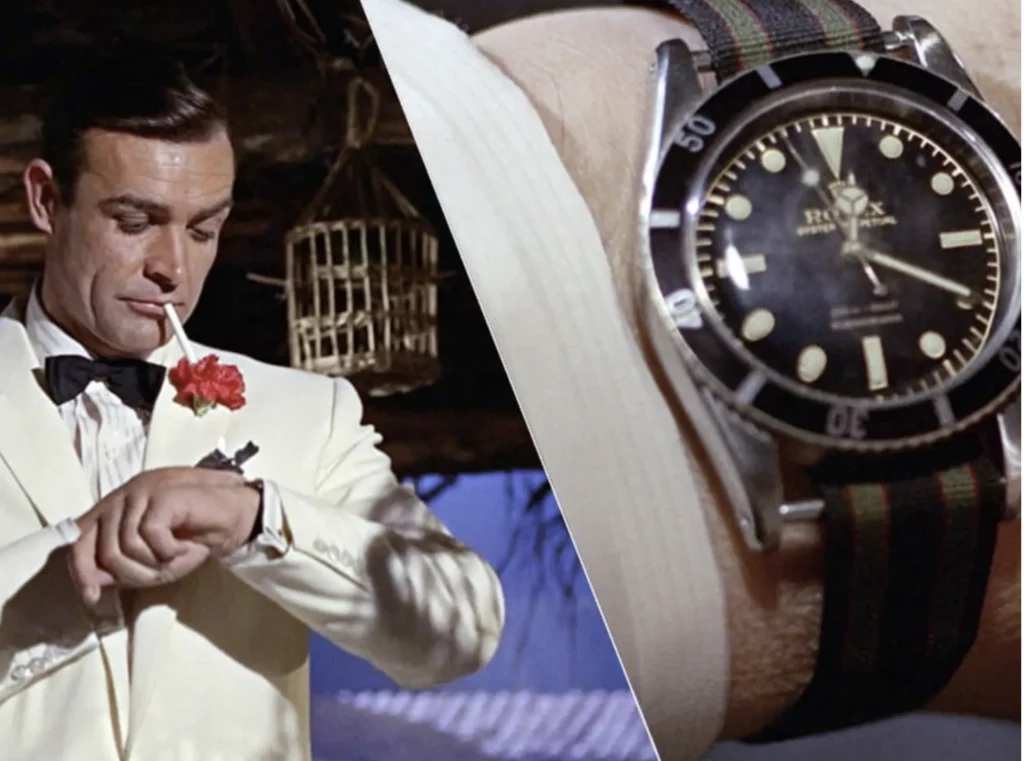
    When we think of watches in pop culture, James Bond immediately comes to mind. Bond’s watches are as iconic as his martinis (shaken, not stirred). Over the decades, his choice of timepieces has evolved from Rolex Submariners in the Sean Connery era to Omega Seamasters in more recent films.

    These watches aren’t just accessories – they’re tools of the trade. Bond’s timepieces often come equipped with gadgets like lasers, grappling hooks, or explosive devices, blending the sophistication of a spy with the ingenuity of a secret agent. Beyond their fictional utility, these watches symbolize Bond’s balance of elegance and practicality, cementing their status as aspirational items for fans worldwide.

    Tony Stark: The Epitome of Luxury

    Tony Stark, aka Iron Man, is another character whose watch choices reflect his personality. Known for his wealth, intellect, and flair for technology, Stark’s watches often showcase cutting-edge designs and luxurious materials.

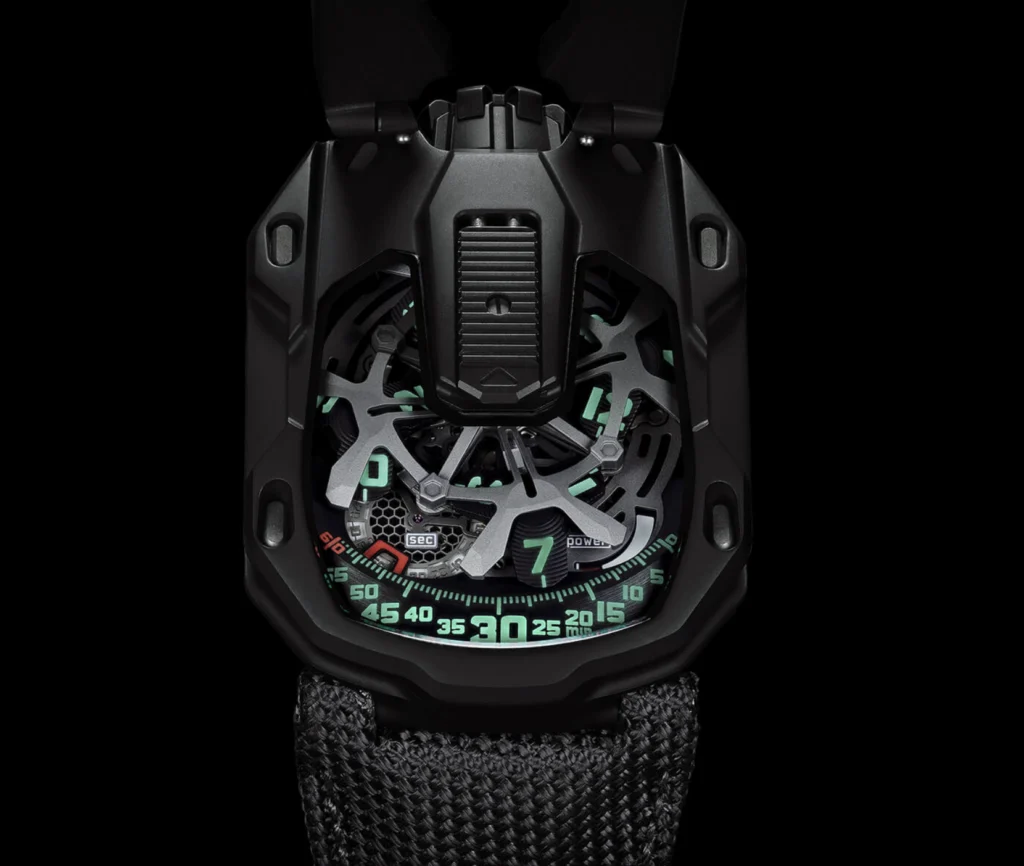
    In Spider-Man: Homecoming, Stark is seen wearing an Urwerk UR-105 CT, a futuristic and highly technical watch that mirrors his genius and love for innovation. This unconventional choice aligns perfectly with Stark’s persona, signaling that he’s not bound by tradition but rather thrives on breaking the mold.

    Marty McFly: A Time Traveler’s Companion

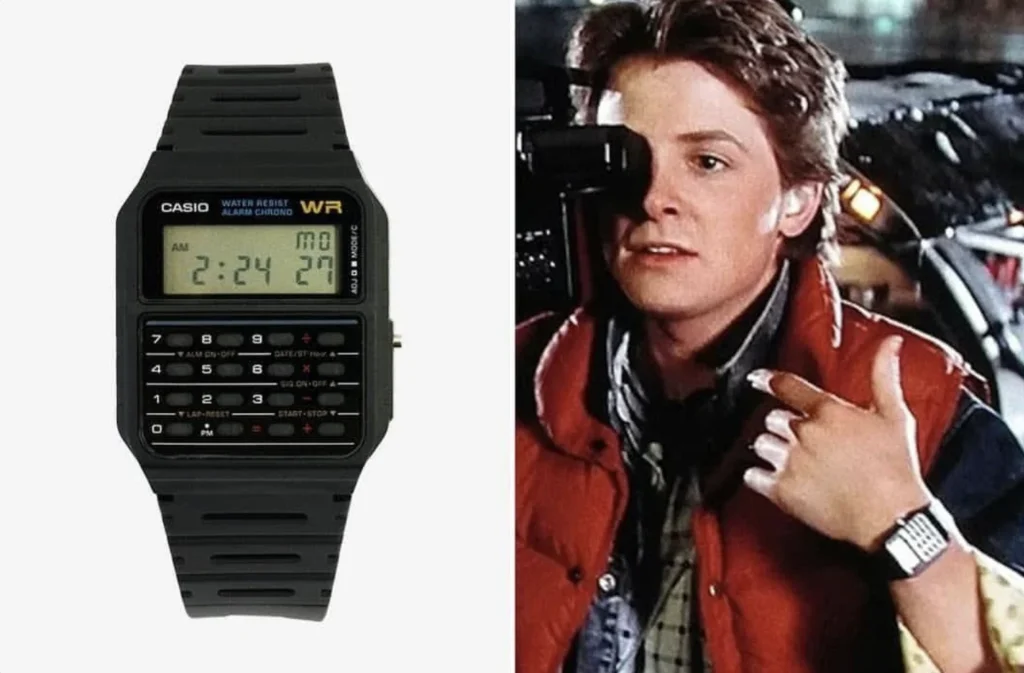
    In Back to the Future, Marty McFly’s Casio CA53W calculator watch is a perfect representation of the 1980s. Practical and tech-forward for its time, the watch symbolizes Marty’s resourcefulness and his connection to Doc Brown’s scientific world.

    While the Casio may lack the glamor of a Bond or Stark timepiece, its down-to-earth charm and utility make it an essential part of Marty’s character. It’s a reminder that even the simplest watch can leave a lasting impression when tied to a beloved story.

    Don Draper: Timeless Sophistication

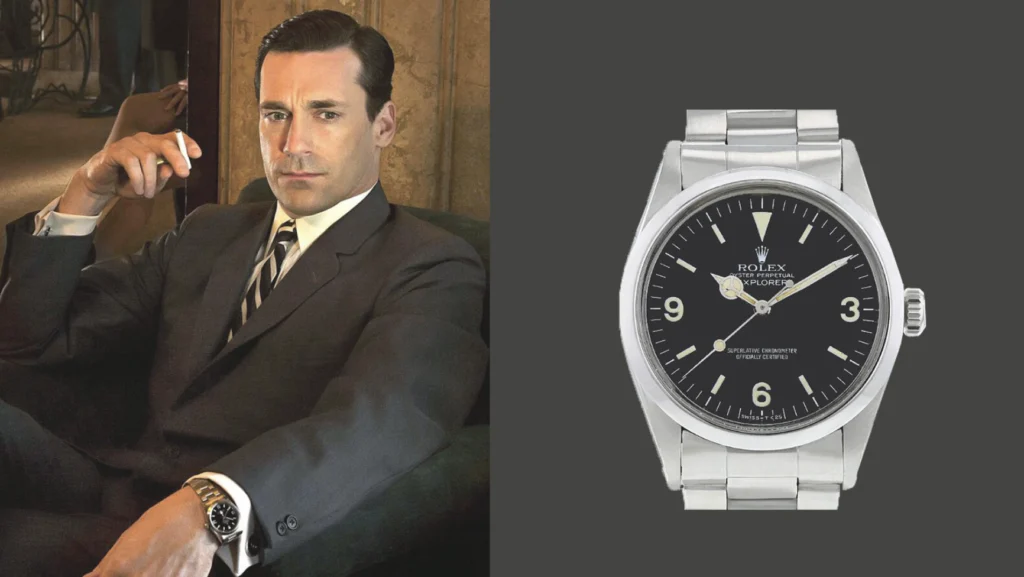
    In Mad Men, Don Draper’s watch is as much a part of his wardrobe as his impeccably tailored suits. The Rolex Explorer he wears reflects his sophisticated, no-nonsense persona.

    The Explorer isn’t flashy; it’s understated yet undeniably stylish, much like Draper himself. It represents ambition, success, and the pursuit of adventure – qualities Draper exudes, even as his personal life reveals cracks beneath the polished surface.

    Jordan Belfort: Flashy Excess

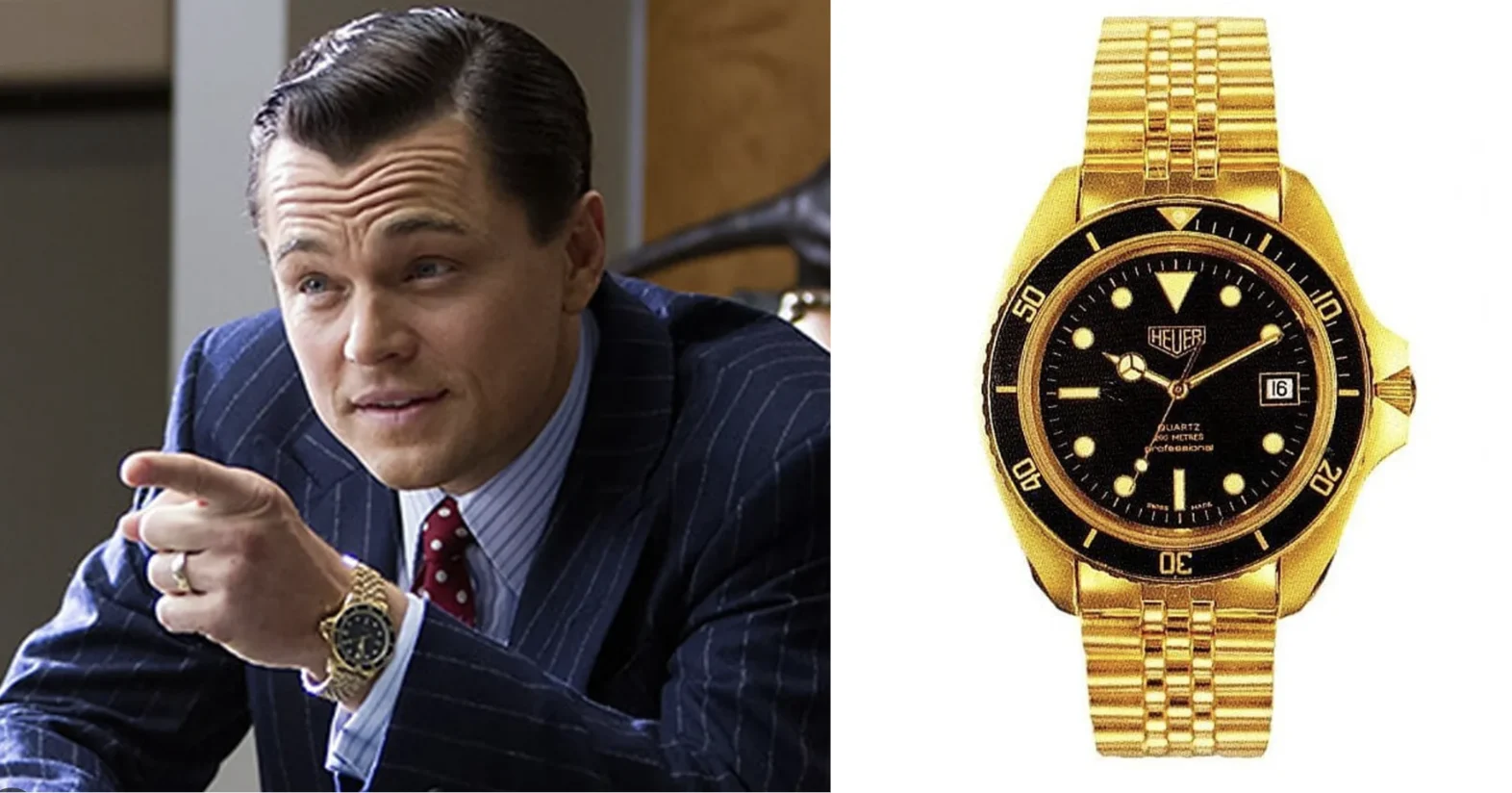
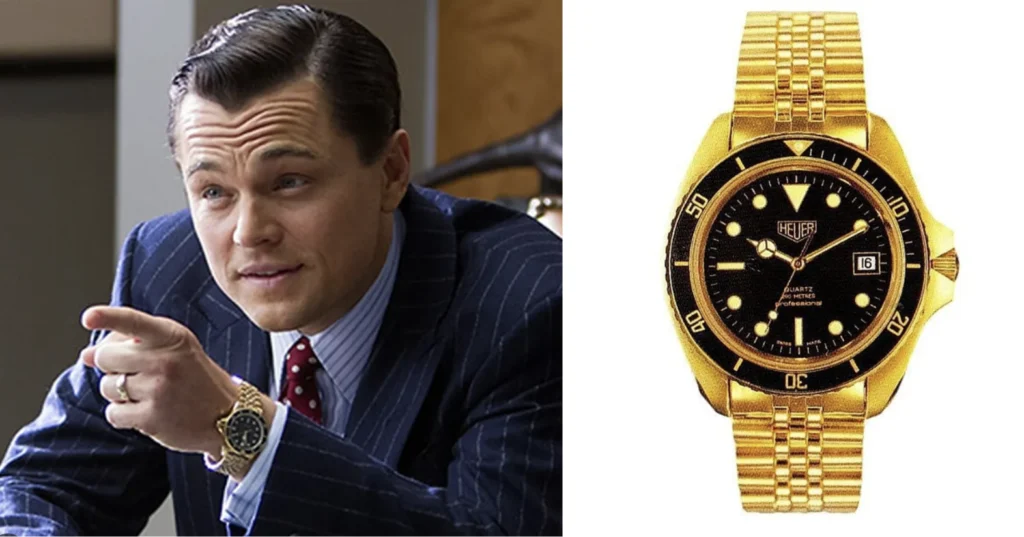
    In The Wolf of Wall Street, Jordan Belfort’s Tag Heuer 1000 Quart in 18k Gold perfectly reflects his extravagant lifestyle. Its bold, gleaming design symbolizes wealth and status, aligning with Belfort’s unrelenting pursuit of success and excess. Both a statement of ambition and a warning of greed’s dangers, the watch enhances Belfort’s larger-than-life persona in the world of high finance.

    John Wick: A Warrior’s Companion

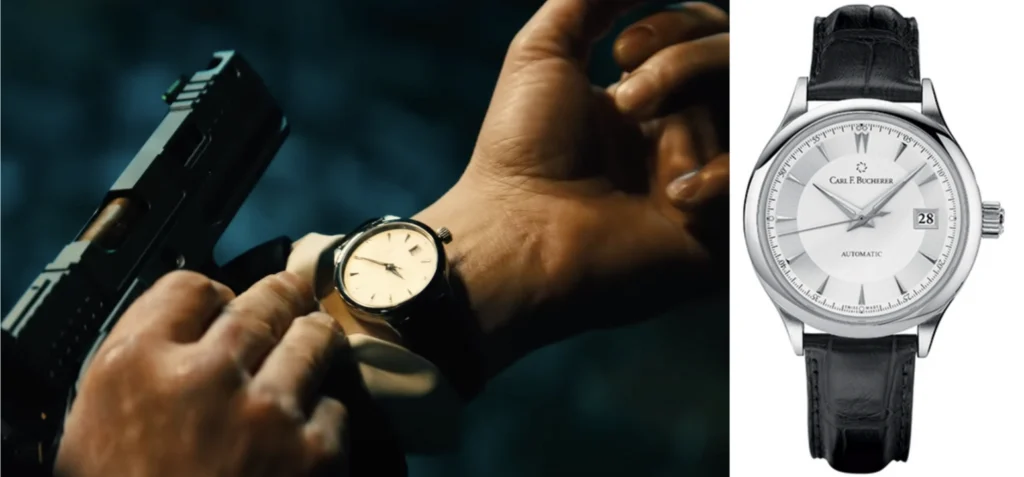
    Keanu Reeves as John Wick wears a Carl F. Bucherer Manero Autodate in the John Wick series. This classic yet understated dress watch reflects Wick’s dual nature: a deadly assassin with a soft, sentimental side. The watch becomes a subtle symbol of his meticulous and refined character, quietly elegant but incredibly precise and lethal when necessary.

    Ellen Ripley: A Futuristic Timepiece

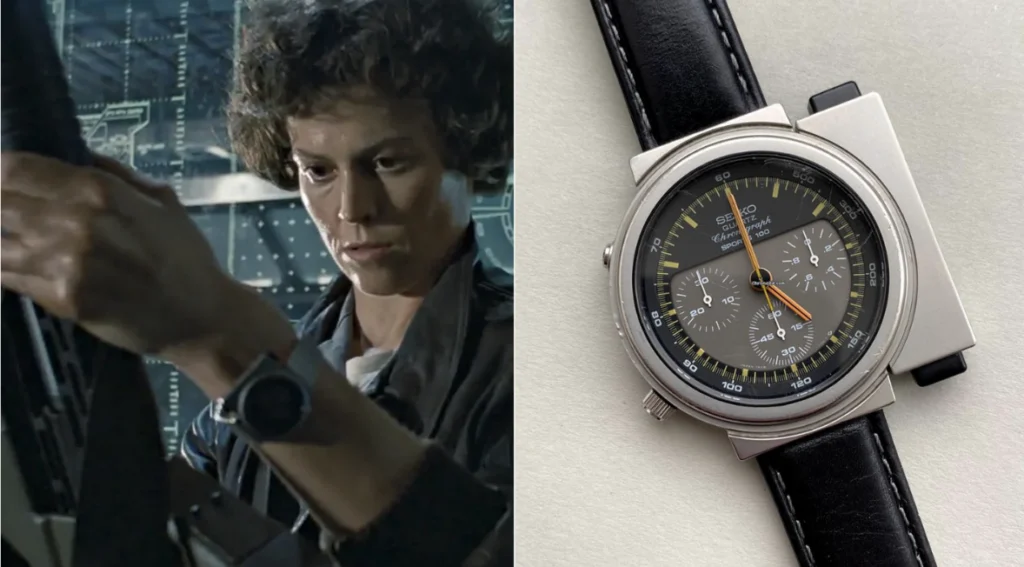
    In Aliens (1986), Sigourney Weaver’s Ellen Ripley wears the Seiko Giugiaro 7A28-7000, a futuristic chronograph designed by automotive designer Giorgetto Giugiaro. Its bold and unconventional design fit perfectly with the sci-fi setting of the movie, while its utilitarian functionality matched Ripley’s pragmatic and tough-as-nails personality.

    Walter White: The Rise of Heisenberg

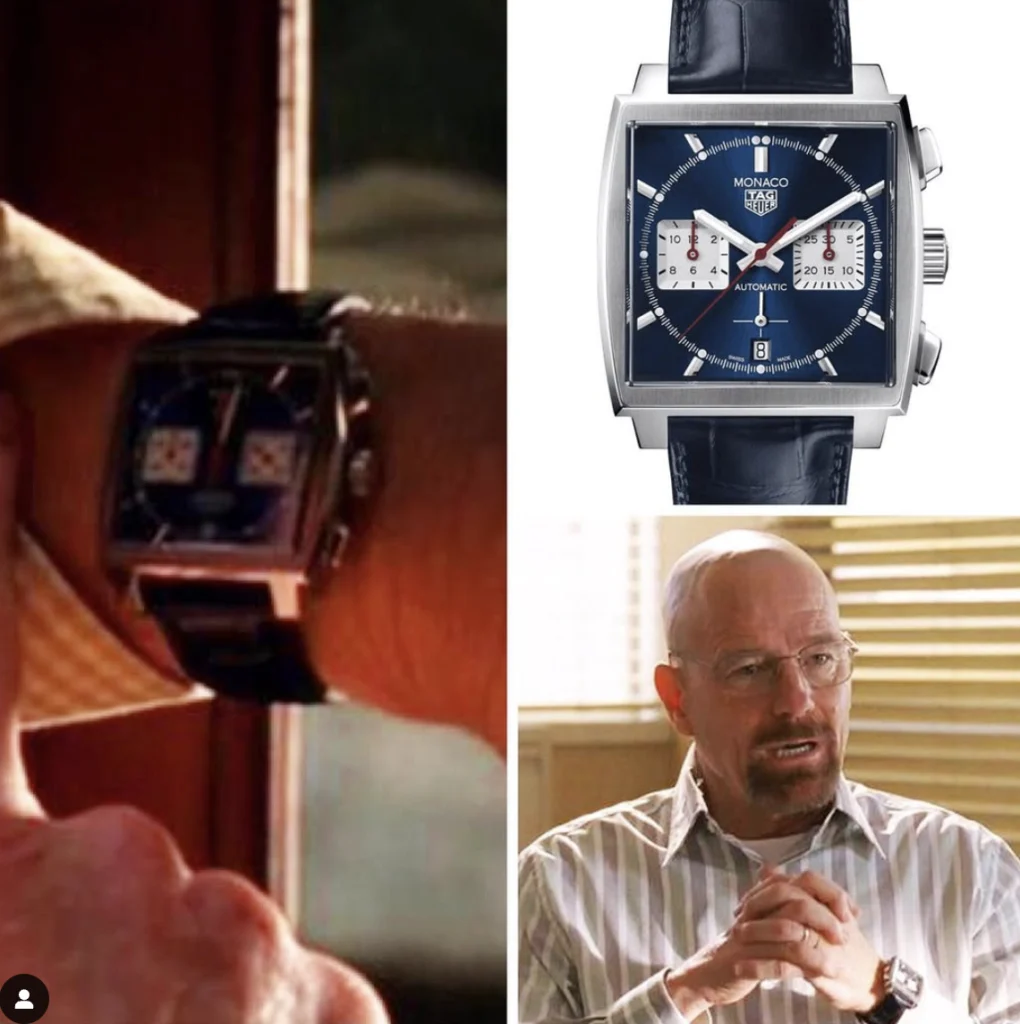
    In Breaking Bad, Walter White’s choice of a TAG Heuer Monaco evolves along with his character. Initially a high school chemistry teacher, Walter’s transformation into the ruthless drug kingpin Heisenberg is mirrored by his move to this iconic and slightly ostentatious timepiece. It represents his newfound confidence and power.

    Bruce Wayne/Batman: Duality in Design

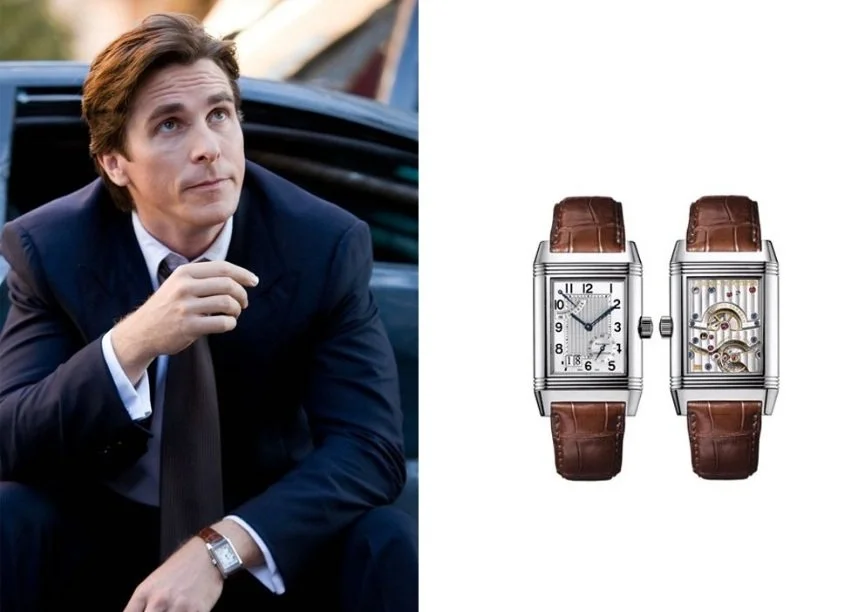
    In The Dark Knight trilogy, Christian Bale’s Bruce Wayne wears a Jaeger-LeCoultre Reverso Grande Taille. The Reverso’s ability to flip its dial mirrors Bruce’s dual life as a billionaire playboy and the crime-fighting Batman. The watch’s elegance aligns with Wayne’s public persona, while its practicality suits his secret identity.

    Patrick Bateman: The Power of Perception

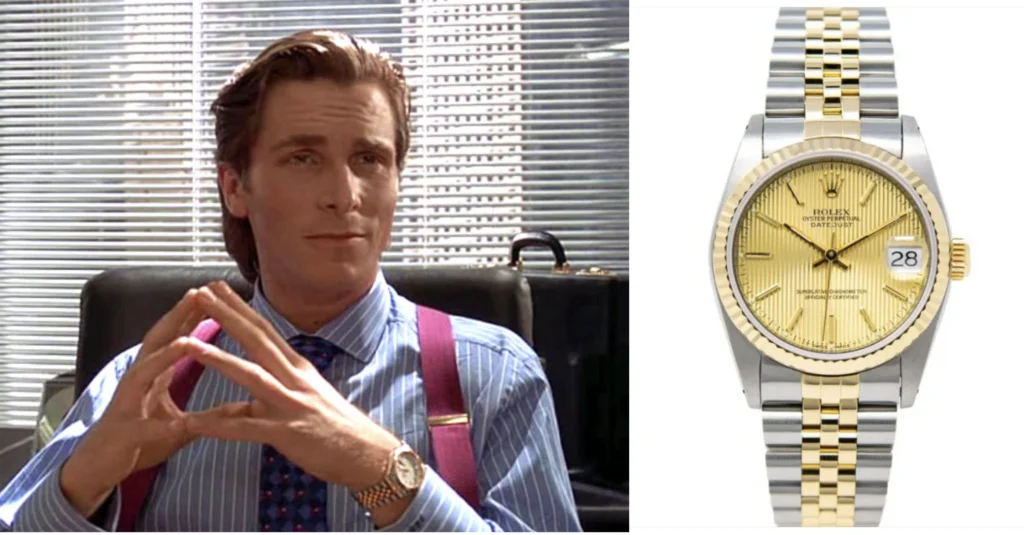
    In American Psycho, Christian Bale’s Patrick Bateman sports a Rolex Datejust, a timeless and luxurious piece that fits his obsession with wealth and appearance. The watch becomes a symbol of his materialism and the shallow values of the 1980s corporate world. Interestingly, Rolex reportedly requested that their name not be associated with Bateman’s darker actions in the film.

    The Impact of Watches in Pop Culture

    Watches in pop culture go beyond aesthetics; they serve as storytelling devices that deepen our understanding of characters. Whether it’s a rugged tool watch, a luxurious timepiece, or a quirky digital companion, these accessories offer subtle clues about a character’s identity, values, and journey.

    For fans, these watches become objects of fascination and aspiration, often blurring the line between fiction and reality. They inspire collectors, spark trends, and create enduring legacies in the world of horology.

    So, the next time you watch a movie or TV show, pay close attention to the watch on a character’s wrist – it might just tell you more about them than you think.

  • Perun Partners with World-Class Freediver Donat Faraguna Gnjatović

    Perun Partners with World-Class Freediver Donat Faraguna Gnjatović

    At Perun, we are delighted to announce our partnership with Donat Faraguna Gnjatović, a trailblazer in the world of freediving. Known for his outstanding achievements as a competitor and his multifaceted contributions to the sport, Donat’s dedication, precision, and ambition align seamlessly with the values we hold at Perun.

    A Champion in the Depths

    Donat Faraguna Gnjatović has earned his place among the elite in freediving, ranking in the top 20 globally in the 2023 and 2024 AIDA standings. He is the 2023 Croatian National Depth Champion and a key member of the Croatian National Team, proudly representing his country on the world stage.

    Donat’s accomplishments are a testament to his determination to excel. With record-breaking dives surpassing 90 meters, he continually pushes the limits of human capability.

    Beyond Competition

    Donat’s impact goes far beyond his personal achievements. He is also a dedicated coach, a respected judge, and an organizer of competitions, playing a vital role in fostering the growth of freediving as a sport. His multifaceted contributions make him a true ambassador for freediving, inspiring both seasoned athletes and newcomers alike.

    A Shared Connection to the Adriatic

    Based in the coastal city of Split, the sea is more than just a backdrop to our daily lives – it’s a source of inspiration, connection, and identity. This deep connection to the sea influenced our decision to partner with Donat, whose career is built on a profound respect for its depths. 

    At Perun, we see our core values mirrored in Donat’s unwavering determination and dedication to his craft. Just as he pushes limits and strives for excellence in freediving, we aim to create timepieces that honor tradition while pushing boundaries.

    Our collaboration with Donat is more than a celebration of his achievements – it’s a shared pursuit of greatness. Together, we aim to encourage resilience, ambition and a commitment to personal growth, whether in sport, craftsmanship, or everyday life.

    To learn more about Donat Faraguna Gnjatović and his inspiring journey, visit his official website – https://www.donatfaraguna.com/

    Stay tuned as we continue to celebrate this exciting partnership and the incredible achievements it brings!

  • Mechanical vs. Quartz: The Ultimate Watch Movement Showdown

    Mechanical vs. Quartz: The Ultimate Watch Movement Showdown

    When it comes to choosing a watch, one of the most important factors to consider is its movement – the mechanism that powers the watch and drives its functions. The debate between mechanical and quartz movements has raged on for decades, dividing watch enthusiasts and casual wearers alike. While both have their strengths and weaknesses, the choice ultimately depends on personal preference and priorities. Let’s break down the key differences between mechanical and quartz movements to help you make an informed decision.

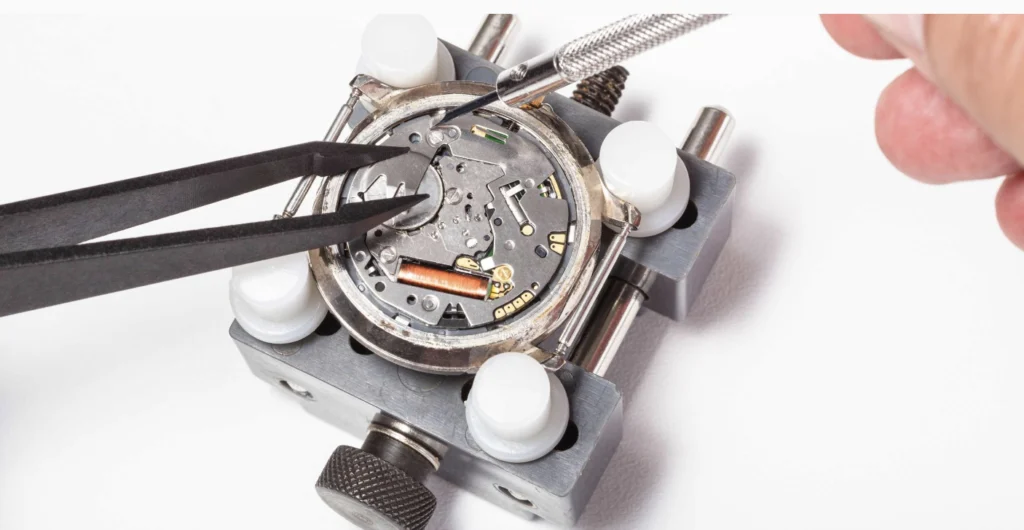
     Photo by VvoeVale
    Photo by VvoeVale

    What is a Mechanical Movement?

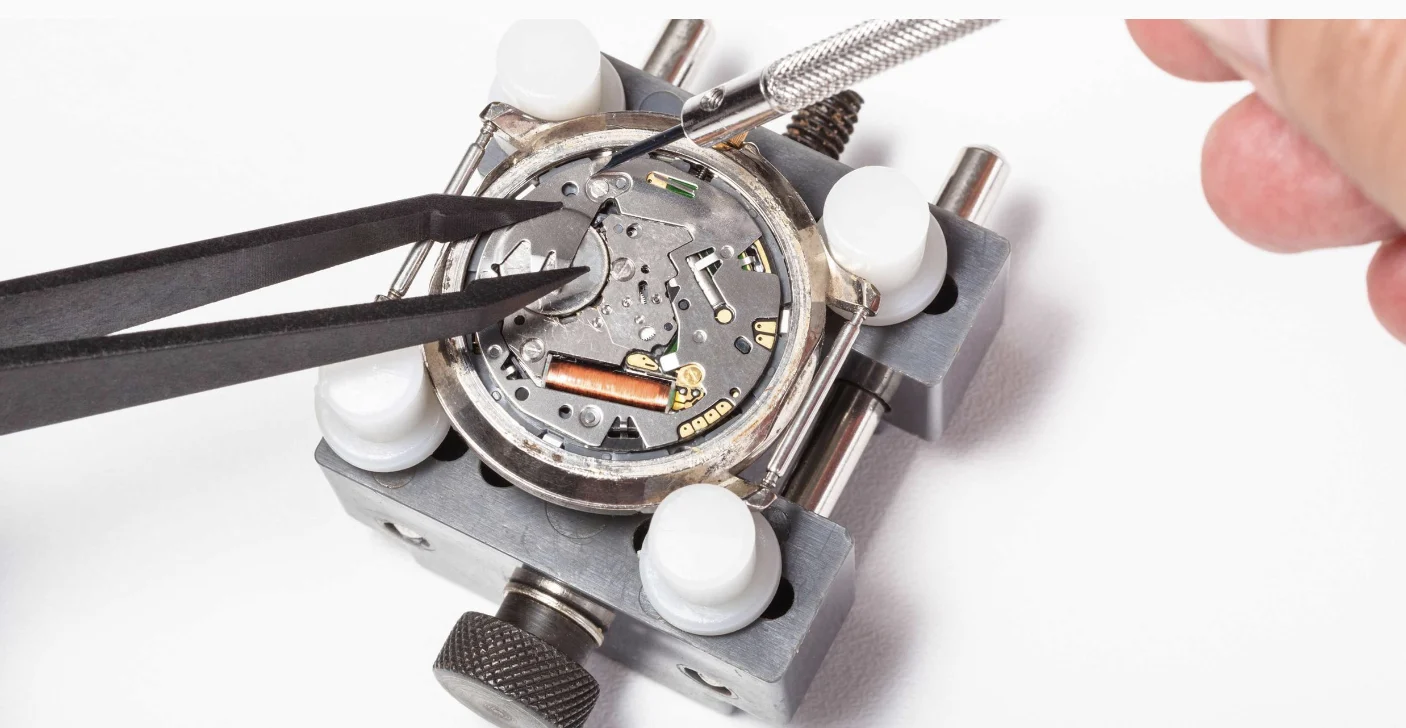
    A mechanical movement is the traditional heart of a watch, powered by a series of gears, springs, and other components working together without the need for a battery. It can be further divided into two categories: manual-winding and automatic movements.

    • Manual-Winding: Requires the wearer to wind the crown regularly to tighten the mainspring, which stores the energy needed to power the watch.

    • Automatic: Features a rotor that winds the mainspring as you move your wrist, eliminating the need for regular manual winding.

    Mechanical movements are celebrated for their craftsmanship, heritage, and the artistry involved in their creation. They are often seen as the pinnacle of horological tradition.

    What is a Quartz Movement?

    Quartz movements, introduced in the late 1960s, revolutionized the watch industry by using a battery to power a quartz crystal oscillator. This oscillator vibrates at a precise frequency, regulating the watch’s timekeeping mechanism. Quartz watches are known for their accuracy, affordability, and low maintenance.

    With fewer moving parts than mechanical watches, quartz movements are simpler, more durable, and less expensive to produce, making them a popular choice for everyday wear.

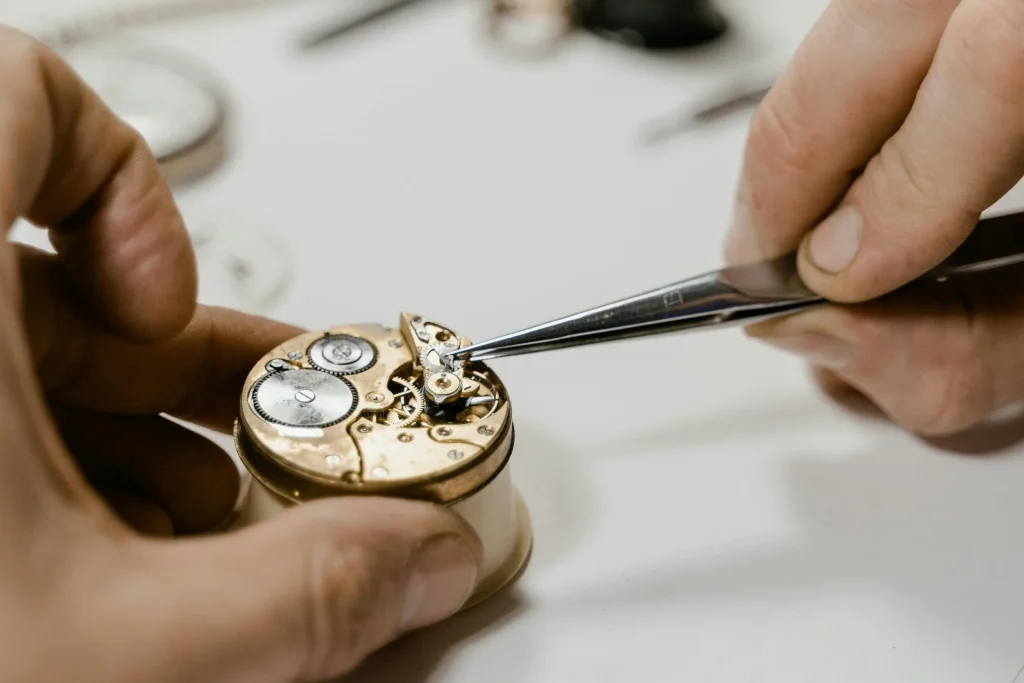
     Photo by Tima Miroshnichenko
    Photo by Tima Miroshnichenko

    Key Differences Between Mechanical and Quartz Movements

    1. Accuracy

      • Quartz: Renowned for its precision, a quartz movement typically loses or gains only a few seconds per month.

      • Mechanical: While impressive given their intricate mechanics, mechanical watches are less accurate, often deviating by several seconds per day.

    2. Maintenance

      • Quartz: Requires minimal maintenance, usually limited to battery replacements every few years.

      • Mechanical: Needs regular servicing (every 3-5 years) to clean and lubricate the movement, which can be costly.

    3. Durability

      • Quartz: Generally more rugged and resistant to shocks due to the simplicity of its mechanism.

      • Mechanical: Delicate components make these watches more susceptible to shocks and require careful handling.

    4. Craftsmanship

      • Quartz: Functional and efficient but lacks the artisanal craftsmanship that defines mechanical watches.

      • Mechanical: Represents centuries of watchmaking heritage, with movements often assembled and finished by hand.

    5. Cost

      • Quartz: More affordable to produce, resulting in lower price points.

      • Mechanical: Higher production costs due to the complexity and craftsmanship involved, often making them more expensive.

    6. User Experience

      • Quartz: Offers convenience with a “set it and forget it” approach.

      • Mechanical: Provides a tactile, engaging experience for watch enthusiasts who enjoy winding their watches or admiring the intricate movements.

    Why Choose a Mechanical Watch?

    Mechanical watches appeal to those who appreciate tradition, artistry, and a deeper connection to their timepiece. The smooth sweep of the second hand, the intricate design of the movement visible through a display case back, and the knowledge that you’re wearing a piece of horological history all contribute to their allure.

    Collectors and enthusiasts often value mechanical watches for their emotional and aesthetic appeal, viewing them as timeless investments that transcend functionality.

    Why Choose a Quartz Watch?

    Quartz watches are ideal for those who prioritize practicality, accuracy, and affordability. They’re perfect for everyday wear, requiring little to no attention apart from an occasional battery change. Additionally, quartz movements are often preferred for sports watches due to their durability and precision.

    For someone looking for a reliable, low-maintenance timepiece without the premium price tag, a quartz watch is a clear winner.

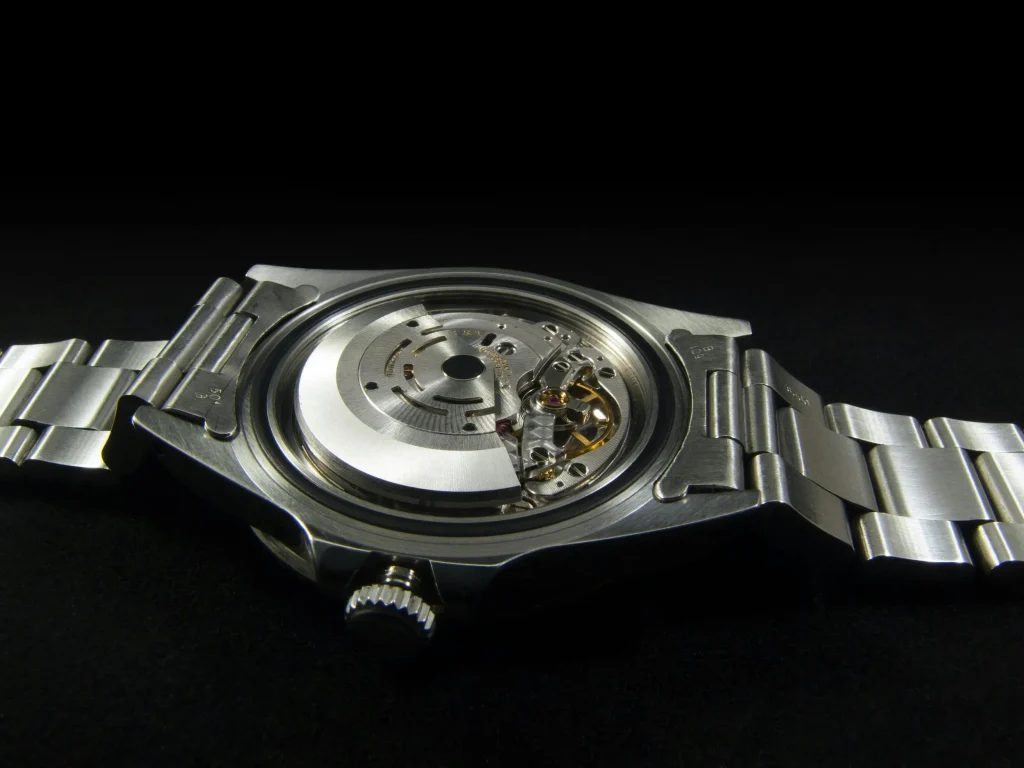
     Photo by Nothing Ahead
    Photo by Nothing Ahead

    Can You Have Both?

    Many watch enthusiasts choose to own both mechanical and quartz watches, appreciating the unique advantages each offers. A mechanical watch may serve as a treasured heirloom or a statement piece for special occasions, while a quartz watch is a go-to for active lifestyles or casual wear.

    Conclusion

    The choice between mechanical and quartz movements ultimately boils down to what you value most in a watch. If you’re drawn to the history, craftsmanship, and artistry of horology, a mechanical watch is the way to go. On the other hand, if you prioritize accuracy, durability, and convenience, a quartz watch is hard to beat.

    Both types of movements have their place in the world of watches, and neither is objectively better than the other. By understanding the strengths and limitations of each, you can find the perfect watch to suit your lifestyle and preferences. Whether you go mechanical, quartz, or both, the true joy of a timepiece lies in the connection it creates between you and the passage of time.

  • Watch Water Resistance Explained: What It Means and How It Works

    Watch Water Resistance Explained: What It Means and How It Works

    In today’s world, where style meets functionality, the water resistance of a watch has become a crucial feature for many watch enthusiasts. But what does it really mean when a watch is labeled as water-resistant? Let’s dive into the details, exploring how water resistance is achieved, its importance in different scenarios, and the rigorous testing processes that ensure your watch can withstand various conditions.

    What Does Water Resistance Mean?

    Water resistance in watches refers to their ability to resist water ingress. The term often varies from “water-resistant” to “waterproof,” but in essence, it signifies how well a watch can withstand exposure to moisture. This is typically measured in meters (m) or atmospheres (ATM), with a higher rating indicating a greater level of resistance.

     Photo by  Max Andrey  on  Unsplash
    Photo by Max Andrey on Unsplash

    How Is Water Resistance Achieved?

    Achieving water resistance involves several design and engineering factors:

    1. Seals and Gaskets: The most critical components in a water-resistant watch are the seals and gaskets. These are usually made from rubber or silicone and are placed at various points, such as the case back, crown, and crystal. They prevent water from entering the watch’s interior.

    2. Screw-Down Crown: Many water-resistant watches feature a screw-down crown, which securely locks the crown in place, further minimizing the risk of water penetration.

    3. Case Design: The case itself is often designed to be sturdy and resistant to water pressure. A well-constructed case minimizes gaps and weak points where water could enter.

    4. Crystal Material: The type of crystal used can also affect water resistance. Sapphire crystal is commonly used due to its durability and scratch resistance, contributing to the overall integrity of the watch.

    Differences in Use

    Not all waterproof watches are created equal, and their use varies based on their specific ratings.

    • 30m/3 ATM: Suitable for everyday wear, splashes, and brief immersion in water. Not recommended for swimming or diving.

    • 50m/5 ATM: Good for swimming and shallow diving. Still, it’s advisable to avoid prolonged exposure.

    • 100m/10 ATM: Ideal for recreational swimming, snorkeling, and light water sports. This rating offers more confidence for water activities.

    • 200m/20 ATM and above: Designed for professional divers and extreme conditions, these watches can withstand deeper dives and harsher environments

      It’s important to note that there are also ranges within these ratings.

     Photo by  Geranimo  on  Unsplash
    Photo by Geranimo on Unsplash

    Common Misconceptions About Water Resistance

    There are several misconceptions surrounding watch water resistance that are worth clarifying:

    1. All Water-Resistant Watches Are the Same: Not all water-resistant ratings are created equal. A watch rated at 30 meters is not suitable for the same activities as one rated at 200 meters. Always check the specific rating to understand its limitations.

    2. Wearing a Water-Resistant Watch in Hot Water is Safe: Exposure to hot water can weaken the seals of a watch, so it’s best to avoid wearing it while bathing or in hot tubs, regardless of its water resistance rating.

    3. You Can Dive to the Full Depth of the Rating: Many believe that they can dive to the full rated depth of their watch indefinitely. However, pressure changes, temperature variations, and extended exposure to water can impact water resistance.

    4. Saltwater and Freshwater Resistance Are the Same: While a watch may be resistant to freshwater, saltwater can be more corrosive and damaging to the materials, which may affect the watch’s integrity over time.

    Testing for Water Resistance

    To ensure that a watch meets its water resistance claims, manufacturers conduct rigorous testing methods:

    1. Pressure Testing: Watches are subjected to specific water pressures in a controlled environment to determine their ability to withstand water exposure.

    2. Water Vapor Testing: This method evaluates how well a watch can handle changes in temperature and humidity, ensuring that moisture doesn’t penetrate the case.

    3. Aging Tests: These tests simulate long-term wear and exposure to various elements to verify that the seals and materials maintain their integrity over time.

    Conclusion

    Understanding water resistance is essential for anyone looking to choose a watch that fits their lifestyle. Whether you’re a casual wearer, a swimmer, or an avid diver, knowing the specifications and capabilities of your watch can help you make an informed choice, allowing you to embrace life’s adventures without worrying about the elements.
  • Breaking Down Complications: The Fascinating Features of High-End Watches

    Breaking Down Complications: The Fascinating Features of High-End Watches

    When it comes to high-end watches, there’s more to them than just keeping time. One of the most captivating aspects of these timepieces is their “complications”—additional functions beyond standard timekeeping that showcase the ingenuity and craftsmanship of watchmaking. From chronographs to perpetual calendars, complications elevate a watch from a practical tool to a piece of mechanical art. In this blog post, we’ll break down some of the most fascinating complications found in high-end watches and explore why they matter.

    What is a Complication?

    In horology, a complication refers to any feature on a watch that does more than display hours, minutes, and seconds. The more complications a watch has, the more intricate and complex its movement becomes. Some complications are designed for practical use, while others are added for sheer luxury or to demonstrate a brand’s technical prowess.

    While some complications may seem subtle or unnecessary in the modern digital age, they represent a rich history of innovation in mechanical watchmaking. Let’s explore some of the most impressive and sought-after complications in high-end watches.

     Photo by  Andreas Bentele
    Photo by Andreas Bentele

    The Chronograph: A Stopwatch on Your Wrist

    One of the most common and useful complications is the chronograph. This feature allows a watch to function as a stopwatch, enabling the wearer to measure elapsed time with precision. Often activated by pushers on the side of the case, the chronograph typically has sub-dials that display seconds, minutes, and even hours.

    What makes the chronograph so appealing is its versatility. Whether you’re timing a race, cooking a meal, or just keeping track of daily tasks, this complication adds both functionality and visual appeal. High-end chronographs, like those from Omega or TAG Heuer, are known for their precision and heritage, making them popular among collectors.

    The Perpetual Calendar: Keeping Perfect Time for Centuries

    A perpetual calendar is one of the most complicated and impressive features in watchmaking. This complication automatically adjusts the date, accounting for months of varying lengths and even leap years. Unlike a standard date feature, which requires manual adjustment several times a year, a perpetual calendar remains accurate for decades, or even centuries.

    This incredible feat of mechanical engineering involves hundreds of tiny parts working in harmony to keep track of the calendar without manual intervention. Watches like the Patek Philippe Grand Complications series are renowned for their perpetual calendars, often considered masterpieces of horology.

    The Tourbillon: A Mechanical Marvel

    The tourbillon is a complication that showcases the pinnacle of watchmaking craftsmanship. Invented in 1795 by Abraham-Louis Breguet, the tourbillon is designed to counteract the effects of gravity on a watch’s movement. In a traditional mechanical watch, gravity can cause tiny variations in the timekeeping mechanism, leading to slight inaccuracies. The tourbillon addresses this by housing the escapement and balance wheel in a rotating cage, which constantly shifts position to negate the effects of gravity.

    While modern watchmaking has largely eliminated the need for a tourbillon with advancements in technology, this complication remains a symbol of mechanical mastery. It’s often featured in luxury watches as a statement of craftsmanship, with brands like Audemars Piguet and Vacheron Constantin producing some of the most famous tourbillon watches.

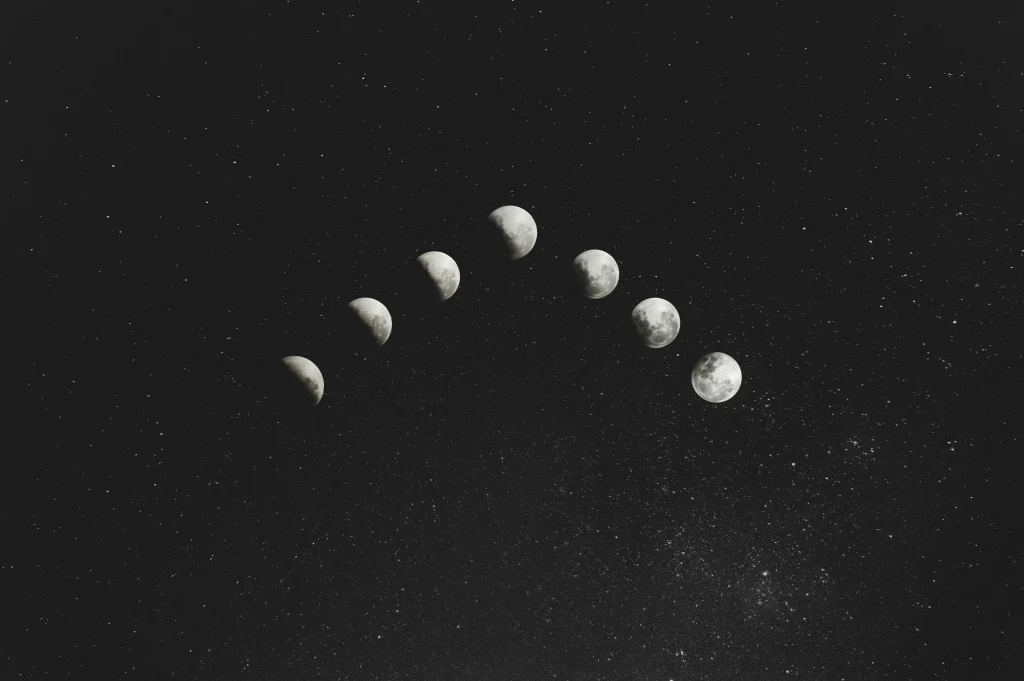
     Photo by  Anderson Rian  
    Photo by Anderson Rian  

    The Moonphase: A Celestial Connection

    The moonphase complication is one of the most visually captivating features in high-end watches. It displays the current phase of the moon by showing its waxing and waning cycles through a small aperture on the dial. This complication was historically important for navigation and farming, though today, it is mostly appreciated for its aesthetic appeal.

    Luxury brands like Jaeger-LeCoultre and Blancpain are known for their beautifully crafted moonphase watches, often pairing this complication with other features like date displays or perpetual calendars. The moonphase adds a poetic touch to a watch, reminding wearers of the connection between time and the natural world.

    The Minute Repeater: A Sound of Luxury

    For those who appreciate both the art of watchmaking and the beauty of sound, the minute repeater is one of the most coveted complications. This feature allows the watch to chime the time on demand, using tiny hammers and gongs inside the case. The minute repeater can strike the hours, quarters, and minutes, making it possible to tell the time without looking at the watch.

    Creating a minute repeater is incredibly complex, requiring an immense amount of skill and precision. Brands like Vacheron Constantin and Patek Philippe are known for their exceptional minute repeater watches, often combining this complication with others like perpetual calendars and tourbillons.

     Photo by  Agê Barros  
    Photo by Agê Barros  

    Why Do Complications Matter?

    For watch enthusiasts and collectors, complications represent the pinnacle of horological achievement. They demonstrate not only the technical skill required to create them but also the rich history of mechanical watchmaking. Complications elevate a watch beyond its practical function, turning it into a work of art that reflects the craftsmanship and creativity of the watchmaker.

    In addition, complications often serve as a statement of luxury and exclusivity. Many high-end brands produce limited edition or bespoke pieces that feature rare complications, making them highly sought after by collectors around the world.

    Conclusion

    Complications are what make high-end watches so fascinating and valuable. Whether you’re drawn to the technical precision of a chronograph or the mechanical marvel of a tourbillon, these features add depth and character to a timepiece. While they may not always be necessary in today’s world, complications keep the tradition of mechanical watchmaking alive, offering a window into the artistry and innovation of horology.

    So next time you admire a luxury watch, take a moment to appreciate the complications that make it more than just a timekeeper—it’s a testament to centuries of craftsmanship and ingenuity.

    Discover the charm of pointer date complication.

  • Exploring the World of Microbrands: Why Independent Watchmakers Matter

    Exploring the World of Microbrands: Why Independent Watchmakers Matter

    In a world dominated by luxury watch giants, a growing movement is quietly transforming the watch industry – microbrands. These independent watchmakers, often driven by passionate individuals or small teams, are creating unique timepieces that offer something fresh in the world of horology. But why do microbrands matter? Let’s explore their appeal and significance.

    What is a Microbrand?

    Microbrands are small, independent watch companies that produce limited quantities of watches. Unlike major brands that rely on mass production and established retail channels, microbrands typically follow a direct-to-consumer model. This enables them to offer high-quality, thoughtfully designed watches at a fraction of the cost of larger names.

    Run by individuals who are deeply passionate about watchmaking, these brands allow for a personalized approach that’s often missing from larger companies. Microbrand founders typically pour their creativity and vision into each design, resulting in watches that are as unique as the people who create them.

     Veles in Pearl White by microbrand Perun
    Veles in Pearl White by microbrand Perun

    Craftsmanship and Attention to Detail

    One of the biggest advantages of microbrands is their commitment to craftsmanship and attention to detail. Since they aren’t focused on large-scale production, microbrands can take their time refining their designs, often resulting in pieces that feel more special and carefully crafted. Whether it’s selecting high-quality materials like sapphire crystals or Swiss movements, or adding intricate detailing, microbrand watches often rival those from luxury brands—without the luxury price tag.

    Microbrands frequently experiment with unusual design elements that reflect the personal style and vision of the founders. This makes the watches feel more curated and authentic, offering buyers a sense of individuality that mass-produced timepieces can’t provide.

    Innovation and Creativity

    Microbrands are not afraid to take risks. With fewer constraints than larger watch companies, these independent brands have the freedom to push the boundaries of design and innovation. Whether it’s exploring vintage-inspired aesthetics, experimenting with unconventional case shapes, or integrating modern technology, microbrands often lead the way in creative watchmaking.

    Because they are driven by personal passion rather than corporate strategy, microbrand founders can explore new ideas and designs without worrying about meeting mass-market expectations. This results in timepieces that stand out for their uniqueness and ingenuity.

    Personal Connection with the Brand

    When you purchase from a microbrand, you’re often buying directly from the founder or a small team, creating a more personal and intimate experience. Many microbrand founders are highly involved in every step of the process, from the initial design to customer service. This allows for direct communication with the person behind the watch, offering a level of connection that larger companies rarely provide.

    For collectors and watch enthusiasts, this personal touch can be a major draw. Knowing the backstory of the watch and having insight into the creative process adds a layer of meaning to the purchase. It’s not just a product – it’s part of a passion-driven journey that you become a part of.

    Limited Editions and Exclusivity

    Microbrands often produce their watches in limited quantities, which gives them a sense of exclusivity. These are not mass-produced items found in every store; they are rare, unique, and hard to come by once sold out. For collectors, this scarcity is part of the appeal, as owning a limited-edition piece can feel special.

    This exclusivity adds an emotional value to the timepiece, turning it into more than just a tool for telling time. Microbrand watches often become conversation starters and treasured items in a collection.

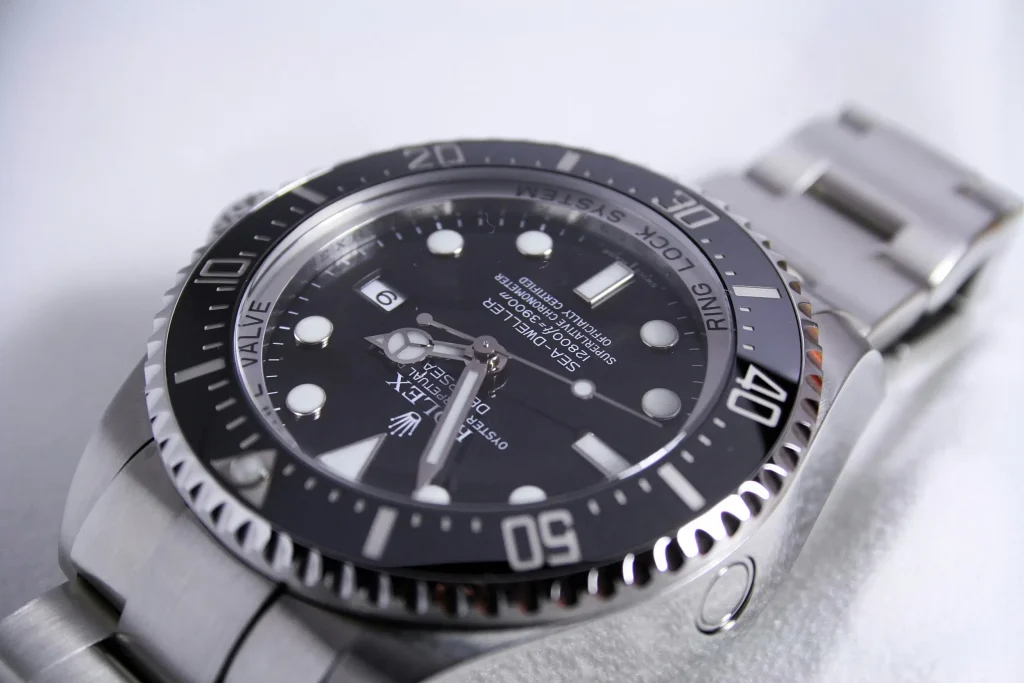
     Rolex Sea-Dweller Deepsea ( Photo by    John Torcasio    on    Unsplash)
    Rolex Sea-Dweller Deepsea ( Photo by John Torcasio on Unsplash)

    Affordable Quality

    Despite their high level of craftsmanship and limited production, microbrand watches are often much more affordable than their luxury counterparts. This is due in part to the direct-to-consumer model, which cuts out the middlemen and reduces marketing costs. By focusing on value, microbrands make high-quality watches more accessible to a broader audience.

    For those who appreciate the finer details of a watch but don’t want to pay for the prestige of a major brand, microbrands offer a perfect balance of quality and affordability.

    Supporting Creativity and Passion

    By choosing to purchase from a microbrand, you are supporting the creativity and passion of independent watchmakers. These brands are driven by a love of horology and the desire to create something new and meaningful. They bring diversity to the watch industry, offering alternatives to the more traditional styles and designs found in large companies.

    Microbrands matter because they represent the spirit of innovation and creativity. They are a reminder that watches are not just functional items but pieces of art and craftsmanship that tell a story.

    Conclusion

    Microbrands are a vital part of the modern watch landscape. Their ability to innovate, their commitment to craftsmanship, and their personal touch set them apart from the larger, more established companies. If you’re looking for something unique, thoughtfully designed, and affordable, exploring the world of microbrands might lead you to your next favorite timepiece.

    Supporting independent watchmakers not only brings diversity to your collection but also helps keep the art of watchmaking alive. So, next time you’re in the market for a watch, consider looking beyond the big names and into the fascinating world of microbrands.

  • Baba Yaga: The Enigmatic Witch of Slavic Folklore

    Baba Yaga: The Enigmatic Witch of Slavic Folklore

    Baba Yaga is one of the most famous and mysterious characters in Slavic folklore. A complex figure, she appears in numerous tales as both a villain and a wise woman, as a fearsome witch but sometimes also a helper. Her duality has fascinated generations, and her legend continues to resonate in modern literature, film, and even video games. But who exactly is Baba Yaga, and why has her myth endured?

    The Character of Baba Yaga

    Baba Yaga is typically portrayed as an old, hag-like woman with long, scraggly hair and sharp teeth. She is often described as thin to the point of being skeletal, with a nose so long that it touches the ceiling when she sleeps. She lives deep in the forest, in a magical hut that stands on chicken legs, capable of moving around at her command. The door of her hut can only be opened by saying a magical phrase, adding to her aura of mystery and power. Surrounding the hut is often a fence made of human bones, with skulls atop the posts, glowing to light her path at night.

    Her mode of transportation is as strange as her home: Baba Yaga flies in a giant mortar, steering with a pestle and sweeping away her tracks with a broom. This combination of domestic tools and fearsome magic ties her to the themes of transformation and boundary-crossing between worlds.

      Samovar “Teremok”,  КБ 581, Manufacturer: master Panferov S.V. and K.
    Samovar “Teremok”,  КБ 581, Manufacturer: master Panferov S.V. and K.

    Tales and Legends

    Baba Yaga appears in countless Slavic folk tales, often testing the protagonists’ wits, bravery, and kindness. One of the most famous tales is “Vasilisa the Beautiful”, where Baba Yaga serves as both an antagonist and a helper. In this story, the heroine, Vasilisa, is sent to Baba Yaga’s hut by her cruel stepmother. Baba Yaga assigns Vasilisa a series of impossible tasks, but with the help of a magical doll given to her by her deceased mother, Vasilisa succeeds. Baba Yaga, impressed by Vasilisa’s humility and hard work, allows her to leave unharmed and even rewards her with light.

    In other stories, Baba Yaga is outright malevolent, capturing and eating children who stray into her forest. However, she’s not purely evil. She often represents a force of nature – wild, untamed, and neutral – demanding respect from those who cross her path. She tests heroes, offering rewards if they prove worthy but delivering harsh consequences for those who are foolish or disrespectful.

    Different Names, Same Witch

    While “Baba Yaga” is her most famous name, she is known by slightly different names and forms across Slavic countries. In Russia, she’s Baba Yaga, but in some parts of the Balkans, she is called Baba Roga (an older variant closer to “Baba Yaga,” though with some distinctions). In Serbian and Croatian folklore, Baba Roga is also feared as a witch who kidnaps or eats children. In Polish folklore, there’s a similar figure called Baba Jędza, an old crone who shares many characteristics with Baba Yaga.

    Though the name “Baba” means “grandmother” or “old woman” in most Slavic languages, the term takes on a darker connotation when paired with “Yaga” (or “Roga”), signifying her supernatural nature and her role as a trickster, an oracle, and sometimes a menace.

     Frau Holle statue on the Meißner
    Frau Holle statue on the Meißner

    Baba Yaga in Other Cultures

    Baba Yaga’s archetype – the fearsome old woman or witch – has parallels in other cultures worldwide. In Germanic folklore, Frau Holle shares some similarities as an old woman who lives in a remote realm and controls the weather. In some versions of the tale, she rewards industrious girls and punishes the lazy, much like Baba Yaga’s testing of heroes in Slavic tales.

    Another parallel can be found in La Befana, the Italian Christmas witch, who visits children on Epiphany Eve. While La Befana is generally more benign than Baba Yaga, both figures are ancient women with magical powers, riding through the sky and interacting with the lives of mortals.

    In Greek mythology, Circe and Hecate share traits with Baba Yaga as powerful women who straddle the line between beneficent and malevolent, dealing in potions, spells, and transformation. Similarly, in Celtic lore, the Cailleach is an ancient hag goddess tied to the land and the cycle of seasons, representing both creation and destruction, just as Baba Yaga controls life and death in her own way.

    Baba Yaga’s Legacy Today

    Despite being a figure from ancient tales, Baba Yaga’s image continues to appear in modern popular culture. From films like John Wick, where she is referenced as a boogeyman, to video games like The Witcher and Rise of the Tomb Raider, her legend lives on. She also appears in contemporary books, often reimagined as a feminist symbol or a misunderstood figure of immense power.

    This ongoing fascination with Baba Yaga speaks to her lasting power as a symbol of nature’s untamed force and the ancient wisdom that she embodies. Whether as a witch, a protector, or a test of character, Baba Yaga remains one of the most enduring figures in Slavic mythology, and her tales continue to captivate audiences across cultures.

    In the end, Baba Yaga represents more than just a witch or a villain – she’s a reminder of the mysteries and dualities that lie at the heart of human nature and the natural world.

  • The Kolovrat: Meaning and the Slavic Sun Wheel

    The Kolovrat: Meaning and the Slavic Sun Wheel

    Few Slavic symbols are as instantly recognisable as the Kolovrat. With its arms radiating from a central point, the symbol seems to be turning even when standing still.

    Most commonly associated with the sun, the cycles of nature and the passage of time, the Kolovrat has become one of the best-known symbols connected with Slavic heritage.

    What Does the Kolovrat Mean?

    The most familiar version of the Kolovrat has eight bent arms arranged around a central point, creating the impression of a rotating wheel or stylised sun.

    Its circular movement is commonly associated with continuity and the recurring rhythms of nature: day and night, the changing seasons, life, renewal and the passing of time.

    Even the name carries the idea of movement: kolo means “wheel” or “circle”, while vrat is rooted in the Slavic idea of turning or rotating.

    An interpretation of the Kolovrat and its solar symbolism
    An interpretation of the Kolovrat and its solar symbolism.

    An Ancient Motif with a Modern Identity

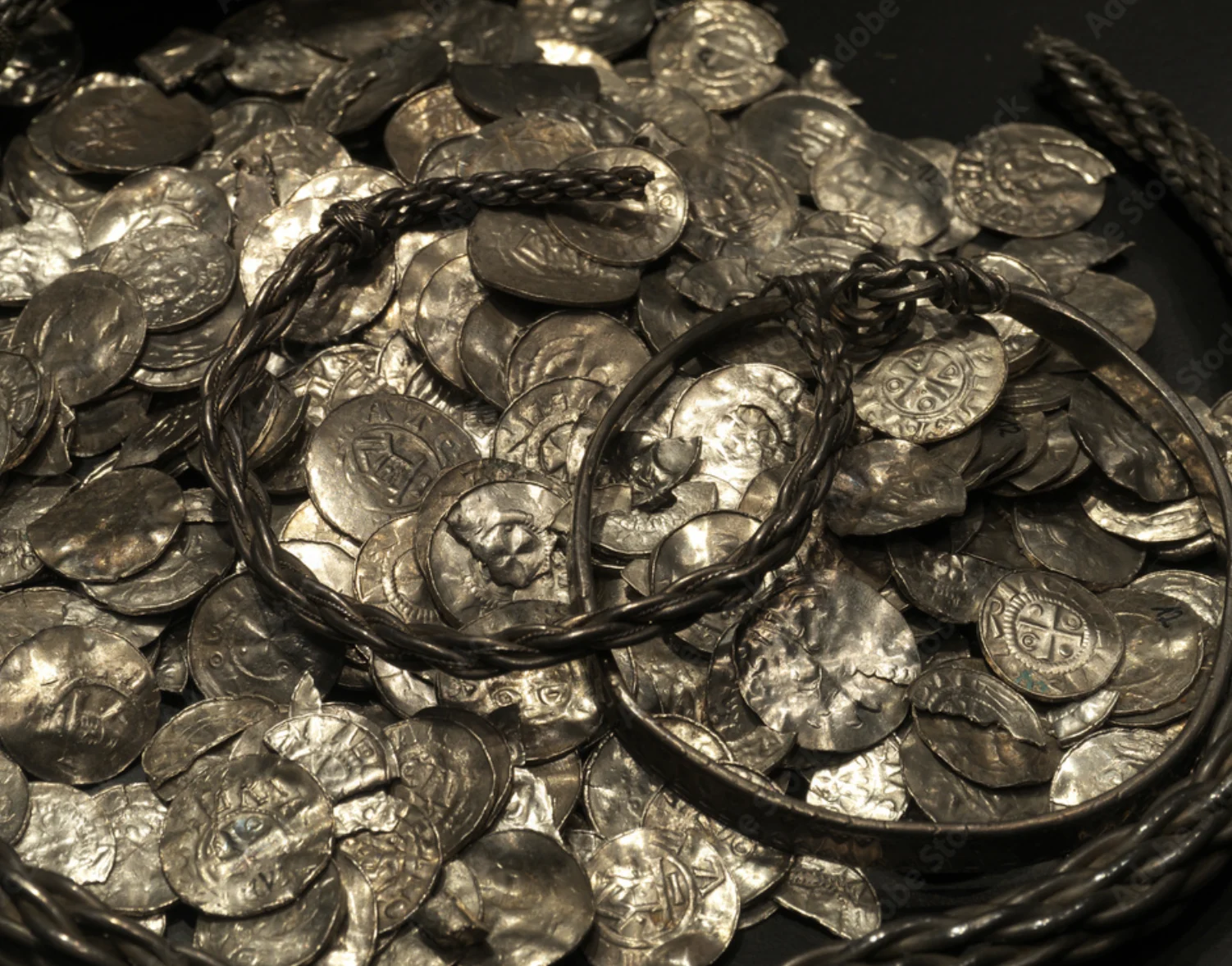
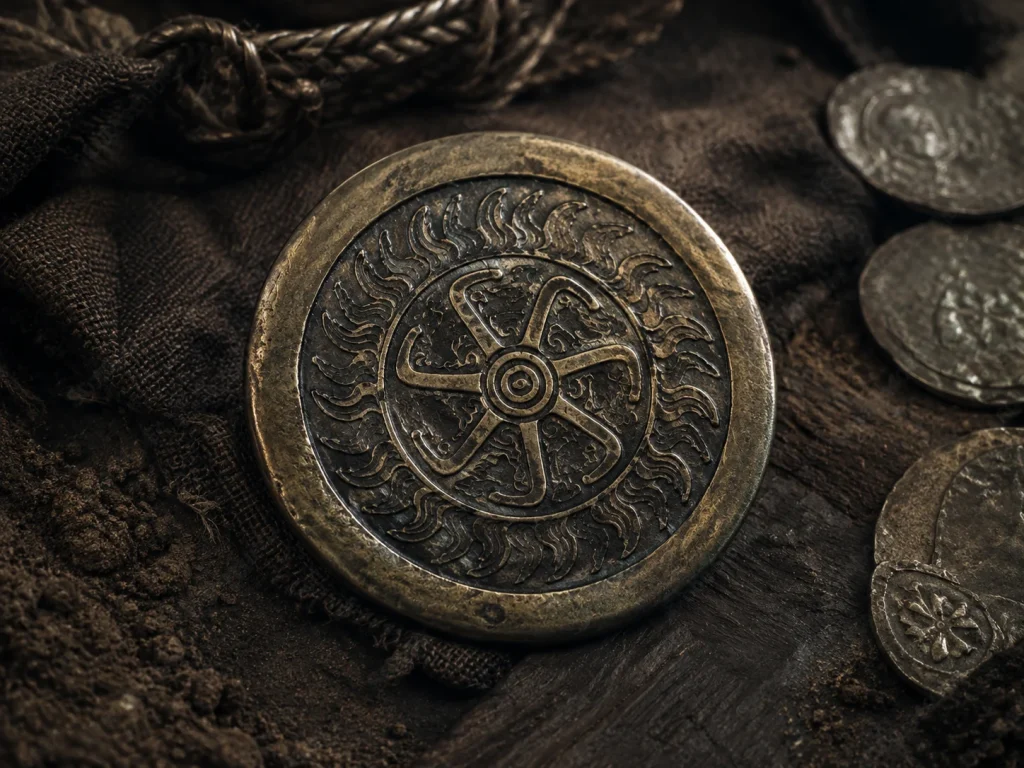
    Rotating wheels, sun signs and similar geometric motifs have appeared across Europe for centuries, including in Slavic regions. Archaeological finds from early medieval Slavic regions show similar rotating motifs on pottery, pendants and other decorative objects, with examples also found incised onto coins.

    The familiar eight-armed version we recognise today took shape much later, drawing on this older language of the sun, rotation and cyclical movement. Over time, it became closely associated with Slavic folklore, heritage and contemporary interpretations of tradition.

    In modern history, some versions of the symbol have also been adopted in political and ideological contexts, adding meanings that are very different from its older solar and cultural associations.

    Old Slavic coins
    Old Slavic coins

    The Kolovrat Today

    The Kolovrat is one of those symbols that has continued to evolve without losing its connection to the past.

    Today, it remains a recognisable expression of Slavic heritage, reinterpreted by new generations while still carrying the ideas of movement, continuity and tradition that have become associated with it.

    For us, preserving that connection does not mean recreating something old. It means allowing small pieces of that heritage to live within contemporary design.

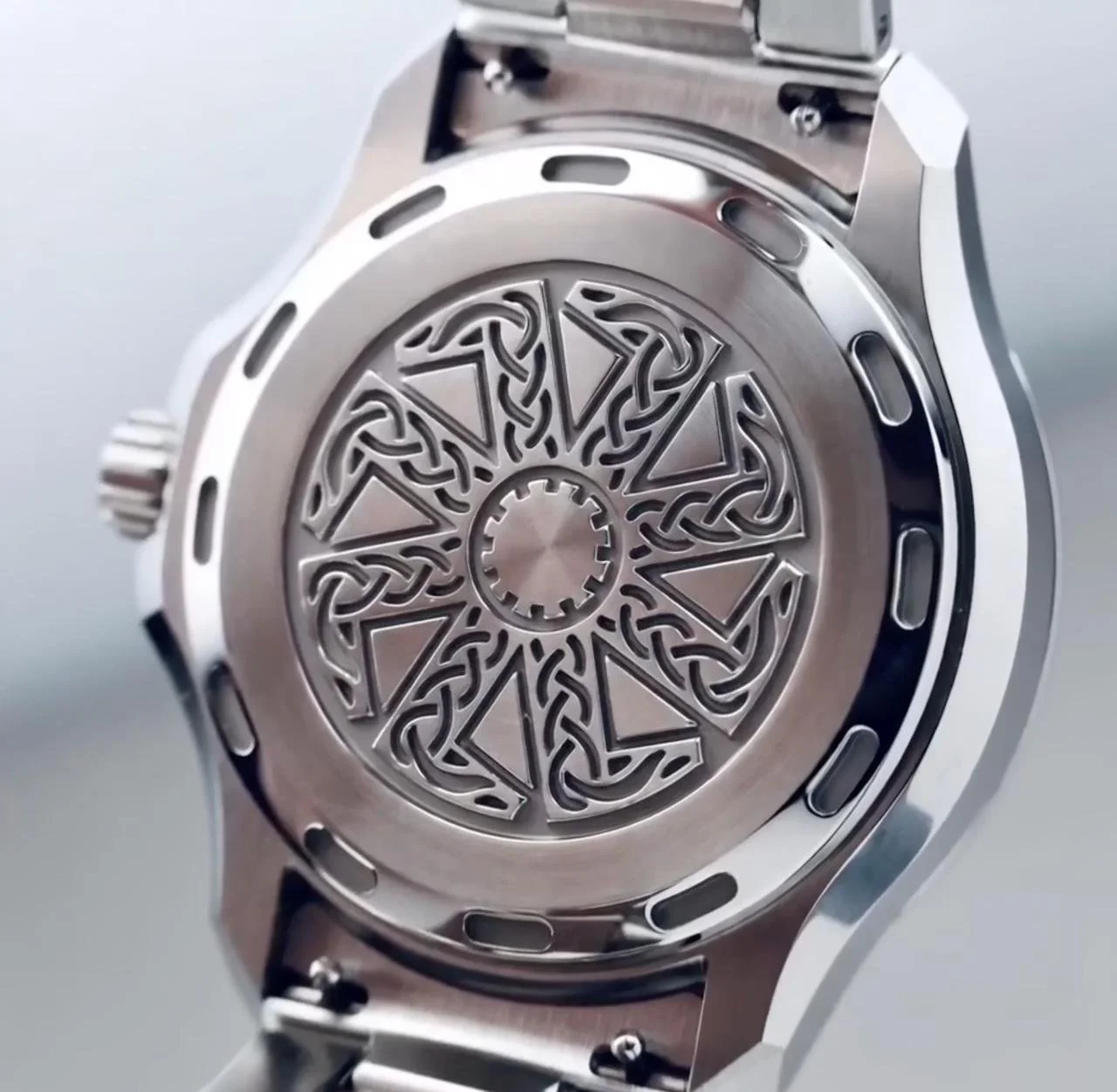
    On Veles, the Kolovrat is not placed prominently on the dial. Instead, it is deeply engraved into the stainless-steel caseback, usually hidden against the wrist.

    It is a detail you discover rather than one that immediately asks for attention: a small piece of Slavic heritage carried with the watch.

    A Symbol That Continues to Turn

    Perhaps part of the Kolovrat’s lasting appeal comes from how simple the idea behind it is.

    A wheel. The sun. Movement. Cycles that end only to begin again.

    Its interpretation has evolved over time, but the symbol itself still carries that unmistakable sense of motion, which is why, centuries after the first rotating and solar motifs appeared, it continues to find new forms today.

    Discover Veles →